 |
 |
Julie Derby |
 |
|
 |
 |
|
Unit Plan
|
|||||||||||||||||||||||||||||||||||||||||||||||||||||||||


|
|
Monday |
Tuesday |
Wednesday |
Thursday |
Friday |
|
Week
1 |
|
|
|
|
Activity 1~ Introduce the Unit |
|
Week 2 |
Activity 2~ Building Prior Knowledge |
Activity 3~ Getting Use to Nonfiction |
Read and Feed! (extra time in class to read) |
Activity 4~ Nonfiction Characteristics |
Read and Feed! (extra time in class to read) |
|
Week 3 |
Activity 5~ Determining Importance and Skimming |
Activity 6~ Highlighting |
Read and Feed! (extra time in class to read) |
Activity
7~ Reviewing |
Complete Comprehension CRT |
|
Week 4 |
Give time in class for students to complete their project. During this time you can move onto the next unit or teach small comprehension lessons. |
Students will present their information on their nonfiction book. |
|||
Lesson Plans
Activity 1
Choosing a Nonfiction Book with Independent Novel Study
Estimated Time: 20 minutes
Lesson Objectives:
As a result of this activity students will:
- Choose a nonfiction book to read for the Independent Novel Study (INS).
- Gain an understanding of different topics of nonfiction books.
Materials needed:
- Examples of nonfiction books that are acceptable for INS.
- Examples of nonfiction books that are not acceptable for INS.
- A list of good nonfiction books the children might be interested in.
Readiness
Anticipatory Set
Read The Unhuggables by The National Wildlife Federation. A picture book -- nonfiction
Start off the lesson by reminding them how we did INS with fictional books. This will be the same, with a 6 week period to read nonfiction books.
Ask them these questions:
- How many weeks (about) should you read one book? (About 2 weeks)
- How many projects do you complete? (At least 2)
- How many books can you read? (at least 2, but you can read more without doing more projects)
- Whose responsibility is it to make a meeting with the teacher? (themselves)
- Who do we keep track of our books? (book log)
- Is it important to keep track of your book log? (yes)
Instruction
Input
Remind the students that reading a nonfiction book is different than reading a fiction book. And that through out this week the students will be learning about the differences from fiction to nonfiction books.
Modeling
For the next few weeks read a nonfiction book aloud to the students. A list is provided below of some good nonfiction books:
A Boy Called Slow by Joseph Bruchac
Talking with Adventurers by Pat Cummings
Molly Bannaky by Alic McGill
From Slave Ship to
Baseball Saved Us by Ken Mochizuki
Assessment
Independent Practice
Students will begin their 6 week INS of non fiction books. They will need to bring 3 nonfiction books to class tomorrow. To help them out spend 15 minutes in the Library so the students can search for a book. It also helps if this lesson is done on a Friday so that the students have time to look over the weekend.
Activity 2
Building from Prior Knowledge
Estimated Time: 25-30 minutes
Lesson Objectives:
As a result of this activity students will:
- recall making connections from fiction books.
- Learn how to make questions from non fiction books
- Create connections for their nonfiction book.
Materials needed:
- 2 stacks of regular Post-It notes.
- Posters labeled:T-T (text to text), T-S (text to self), and T-W (text to world)
- Posters labeled: A (answered from text), BK (answered from background knowledge), I (answered from inferencing), D (answered by discussion), RS (answered from research), C (confusion)
Readiness
Anticipatory Set
Ask the students:
- If they remember what T-T means, and how it can be used. (text to text)
- If they remember what T-S means, and how it can be used. (text to self)
- If they remember what T-W means, and how it can be used. (text to world)
- Which one do they think will get used the most during this INS? Why? (varied answers)
Instruction
Input
Students will start marking their books (or using post its, if the book is not theirs) to remember what's important, their questions, and of course connections. Marking the books will help the students remember their information on their book. This will help them on their final project for their non fiction book (which is creating a power point presentation on a topic in the book). This will also help the students activate prior knowledge and allow them to connect more with the book, helping them to enjoy it more. It will also keep them active while reading, so it's harder to dose off (which can happen while reading non fiction books). Inform the students 2 new markings:
* = (a star) very important!
L = New information I learned
And inform the students that both the start and the L can be used at the same time, if it happens to be new information that they learned that's very important.
Students will also be making connections, which they already know from fiction books. Remind the students again what the codes stand for. Then go into making questions, which is similar to making connections, but obviously with questions. Tell the students, just like making connections, you are already making questions while you are reading, now you have to put it down, so that you can possibly answer that question that you have. Share the new question codes with the students:
A= Questions that are answered in the text
BK = Questions answered from background knowledge
I = Questions that can be answered by inferred from the text
D = Questions that can be answered by further discussion
RS = Questions that require further research
? or C = Questions that signal confusion (huh?)
Modeling
Today while reading the read aloud non fiction book, make connections and making questions. Try to show students that their brain is already making connections and making questions by them thinking it, they just now need to write it on a post it note. Remind them this will help them with their project.
Assessment
Independent Practice
Students will have time in class to begin reading
their book. I suggest
during this time the teacher goes around to make sure their book
is non fiction. During
this time students will be making connections and questions (also
labeling the L and *) to activate prior knowledge.
Activity 3
Getting use to Nonfiction Text
Estimated Time: 25 minutes
Lesson Objectives:
As a result of this activity students will:
- become familiar with nonfiction books.
- discuss how nonfiction books are set up and are used
Materials needed:
- At least 15 copies of nonfiction picture books (if needed hold class in the library).
Activity:
Have students partner up.
As partners, students will read to each other (from the nonfiction
picture books). While
they are reading they will discuss how the nonfiction book is different
from a fiction book. They
will also make connections and questions in the books that they
read. If they finish
early, they can then move on to another book.
The students should also discuss on why they think nonfiction
books are different from fiction books.
Activity 4
Getting familiar with Characteristics of Non Fiction Books
Estimated Time: 45 minutes
Lesson Objectives:
As a result of this activity students will:
- Become familiar with non fiction books
Materials needed:
- Hungry, Hungry, Sharks by Joanna Cole (or another picture non fiction book)
- 27 Sheets of construction paper
- Markers and crayons for each child (students will bring their own)
Readiness
Anticipatory Set
Have the students on a sheet of paper write down facts they already know about sharks. Then read Hungry, Hungry Sharks by Joanna Cole. When you are done reading the book ask the students to know write down what they have learned from the book and questions they still have about sharks.
Instruction
Input
Inform your students that nonfiction books are different from fiction books. And knowing the characteristics of the book can help you read and better understand that book. Begin to discuss the characteristics of nonfiction books:
- Fonts and effects: When the font has been changed in the text (like italics, bold, underlined, different font, etc) it shows that it is of great importance!
- Illustrations/Photographs: These photographs are used to capture your interest and to bring what you are reading into a deeper meaning.
- Captions: under each illustration, photograph, graph, map, etc there is a caption telling the reading why this picture is important and what it has to do with the reading.
- Headings and subheadings: tells you the main idea of what you are going to be reading.
Modeling
Show some examples of nonfiction books and the characteristics of the books. Point out captions, headings, and font effects.
Assessment
Guided Practice/Independent Practice
Students will make a nonfiction book page on sharks, based
on what we have read in class.
They will use a large sheet of construction paper.
They will need to illustrate, use diagrams, labels, captions,
text with important information on what they know about sharks with
headings, etc. Requirements:
(at least) one paragraph on sharks (with a heading), a picture (with
a caption), and they must display this page like a nonfiction book.
Activity 5
Determining Importance and Skimming
Estimated
Time: 45 minutes-60 minutes
Lesson Objectives:
As a result of this activity students will:
- Become skilled at skimming non fiction literature.
- Skim pieces of literature to determine importance.
- Be able to determine important information in nonfiction books
Materials needed:
- 27 copies MacMillan English Book
- 5 slates & markers
Readiness
Anticipatory Set
Play a quick game like jeopardy. Place students in groups, and give each group a slate and a marker. Ask the following questions, then once the students have the answers (after discussing), then have them display their answers. After everyone answers go into a small discussion over the answers. Questions:
- Can you ignore things in your nonfiction book? (yep, you have to determine the importance)
- Do you have to read things from front to back (all in order)? (no)
- Where might you find out a review of what you are about to read? (topic sentence, headings)
- What might you use to determine importance? (review from yesterdays on how nonfiction books are organized.)
Instruction
Input
After the short review of yesterdays lesson (the organization of nonfiction books), discuss how you can use that to determine something is important. Afterwards state that one should overview their book before reading it (or in the beginning of the book). To overview they need to read the back, to determine what the topic of the book is about (to activate their prior knowledge). Then they need to note the headings and subheadings, this way they can determine what to read and what to ignore, they could also then determine what order they would like to read it. Now after they have overview tell them that in some parts of their book they might just want to skim instead of reading every word. Skimming is not reading everything; you are overlooking what is on the page, and still paying close attention mainly to the important aspects of the book. A good way to skim (and to determine whether or not to read the paragraph) is to read the first and the last sentence of the paragraphs (ask the students why this is), because the first sentence is a topic sentence and the last sentence will summarize what the paragraph just stated. Teach also Skimming and Scanning page 82 in the MacMillan English book, which has some good pointers for skimming.
Modeling
While reading the read aloud book today, model a review, and think aloud on how you determined whether or not it is important to read.
Assessment
Independent Practice
Students will complete the Skimming
and Scanning page 82, part B in the MacMillan English book.
Activity 6
Highlighting
Estimated
Time: 30-40 minutes
Lesson Objectives:
As a result of this activity students will:
- Utilize what they have learned yesterday on determining importance to high light.
- Understand why we highlight and what to highlight.
Materials needed:
- 27 highlighters
- 27 copies of a nonfiction literature
Readiness
Anticipatory Set
Have a highlighter out and ask the students:
- What is this? (highlighter)
- What is it used for? (To highlight important information)
- Does it matter what color it is?
Hand each student a highlighter, and give them a few moments to mess around with it.
Instruction
Input
Inform the students that they will need to know how to determine the importance of information (they are reading) before they are able to highlight, so review yesterdays lesson on determining importance and skimming). Here are the important key points of highlighting gathered from Strategies that Work by Stephanie Harvey:
- Review the paragraph by reading the first and last sentence. This is where a lot of information is located.
-
Don't
highlight entire sentences, only key points.
- Make notes in the margin.
- Pay attention to the things you are marking L (this if information you just learned) (always note the *)
- Remember how nonfiction books are organized (do a review from the other day)
- A good measurement for highlighting is about 1/3 of a paragraph (or about 15% of a page).
- Note the key words (create a poster of key words)
Modeling
Take the worksheet titled Walden Robert Cassotto (by the Teacher Created Resource) and model the first paragraph by reading, highlighting, and taking notes to the side.
Assessment
Independent Practice
Students will complete the worksheet by reading, highlighting,
and taking notes to the side.
Once they have finished this task they should answer the
questions on the back of the worksheet.
Activity 7
Reviewing
Estimated Time: 15 minutes
Lesson Objectives:
As a result of this activity students will:
- Review the features of nonfiction books..
Materials needed:
- 27 highlighters
- 27 copies of a nonfiction magazine article (such as in National Geographic)
-
Independent Practice
Students will complete the worksheet by reading, highlighting, and taking notes to the side. Once they have finished this task they should answer the questions on the back of the worksheet.
Writing Connection
Writing a Nonfiction Books
Estimated Time: 2 weeks
Lesson Objectives:
As a result of this activity students will:
- understand how nonfiction books are organized
- write their own nonfiction book
Materials Needed:
- White paper
- the Computer lab
-
Instruction
Input
Ask students what they are an experts in (give an example
of what you might be an expert in, such as photography, horses,
etc). Have the students discuss what they are experts in with a
partner, and then narrow it down to one expert.
Throughout the week students will be learning how a nonfiction
book has been put together and how they are organized.
Students within the next few weeks with write their own nonfiction
book. Their book must
include:
- A table of contents
- 7 headings (at least 1 paragraph per a heading)
- 1 sub heading
- Pictures with captions
- Bibliography
- And must display nonfiction book characteristics
Model
Show the students your own book, and point how you put it together, how it's laid out, and how it's all on the topic of what you are an expert in.
Assessment
Independent Practice
Students will complete their nonfiction books. They will be given 1 day to come up with a topic they will write about and 7 headings (not the paragraphs). Then students will be given a few days to write their paragraph. At this point students will need to peer edit their work. When they have peer edit they then need to type their paragraphs, and put it together as a book!
Spelling Connection
Vocabulary words for this week deal with words on nonfiction books.
1.) similarly
2.) consequently
3.) nevertheless
4.) solution
5.) nonfiction
6.) highlight
7.) importance
8.) organizers
9.) italics
10.) captions
11.) over viewing
12.) ignore
Materials/Equipment
You will need:
Examples of nonfiction books (both below grade level and on grade level)
Post-it notes
Poster Labeled for Making Connections and Questions (Activity 2)
Picture nonfiction books
27 Copies of MacMillan English book
5 slates & markers
27 Walden Robert Cassotto worksheet
27 Games with a History worksheet
27 The History of Pockets worksheet
27 Mission to Mars worksheet
27 The PowerPoint rubric
27 PowerPoint outlines
Computers
White Paper
Glue sticks
Attached are some materials used for this unit. Below is a list of what is attached:
Walden Robert Cassotto worksheet
Games with a History worksheet
The History of Pockets worksheet
The PowerPoint rubric
PowerPoint outlines
Assessment
As a pre assessment students will complete Mission to Mars (by Teacher Created Resources) a short nonfiction piece, and then complete the questions on the back of the sheet.
Small assessments will be collected during the unit, such as their nonfiction literature they are highlighting in activity 6 and the completed page in the MacMillan English book in activity 5.
The big assessment will be the student's final project.
Students will need to create a power point to present a piece
of information they read in their books.
There is a power point evaluation form (rubric) that the
students need to follow. This
should be introduced on the second day so that students who finish
their book early may begin working on their power point.
Students will also be assed by their completion of their
nonfiction book (for writing) and the comprehension CRT.
Differentiation
Extensions
For gifted students, or students who love to read, they can read as many books as they can during this time as long as they record their books in their reading log (this is the joy of Independent Novel Study, students can read at their own pace and as more than 2 books). Students may also do an extra project on another nonfiction book. They may choose from their list of project list.
For Students with Special Needs
Using an outline for the student's final project will help the children
visualize what their power point will look like.
They will also spend less time on the computer due to their
outline. If reading
a nonfiction book is difficult for their 2nd nonfiction
book they may read a little below grade level (what would be a good
level for what reading level they are currently on).
Resources
Strategies that Work by Stephanie Harvey and Anne Goudvis
MacMillan English by MacMillan
Reading Comprehension: 6th grade by Teacher Created Resources.
The Unhuggables by The National Wildlife Federation
A list of good nonfiction books:
A Boy Called Slow by Joseph Bruchac
Talking with Adventurers by Pat Cummings
Molly Bannaky by Alic McGill
From Slave Ship to
Baseball
Saved Us by Ken
Mochizuki
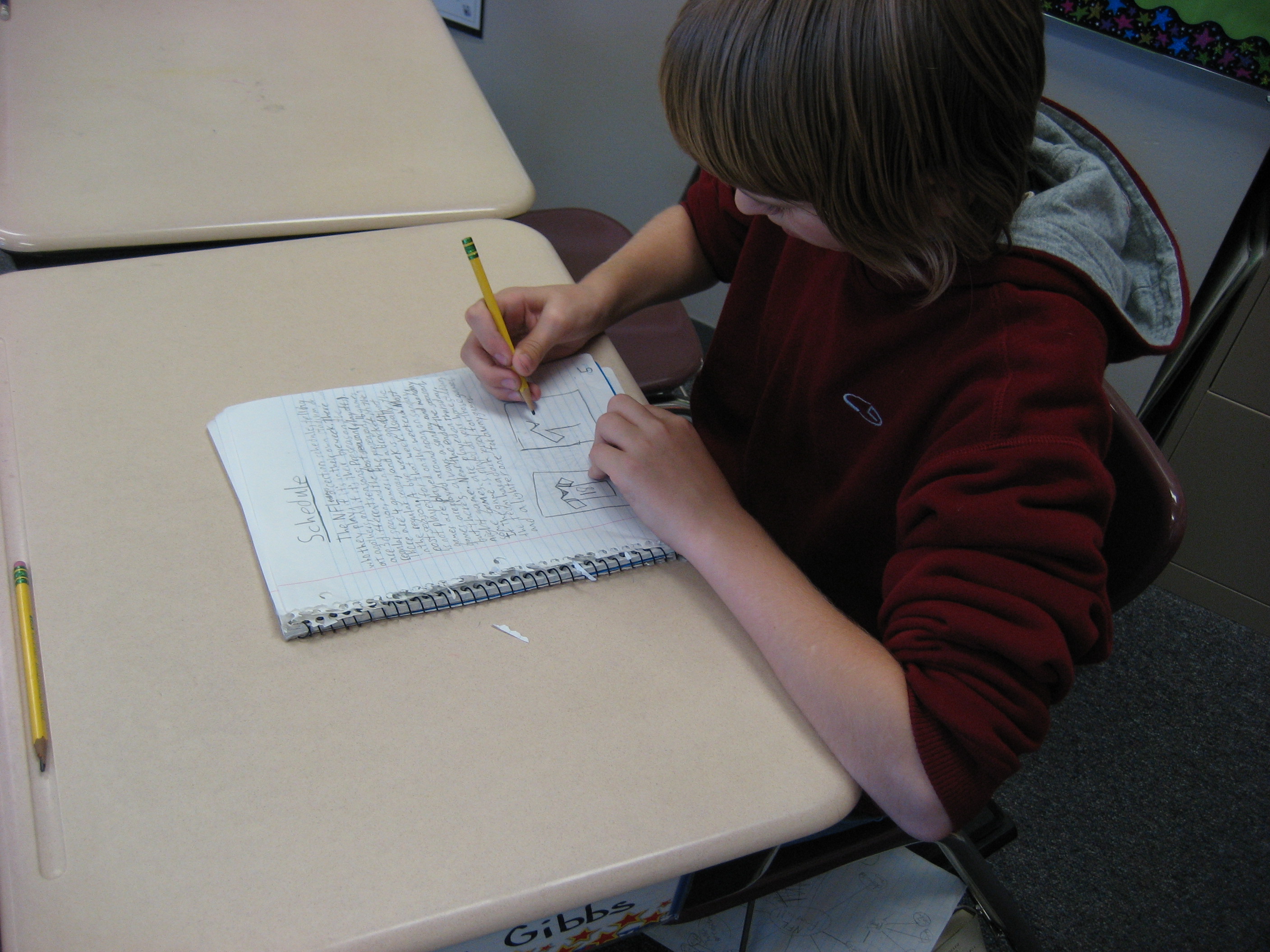
Bobby G is working on a rough draft for his nonfiction book.
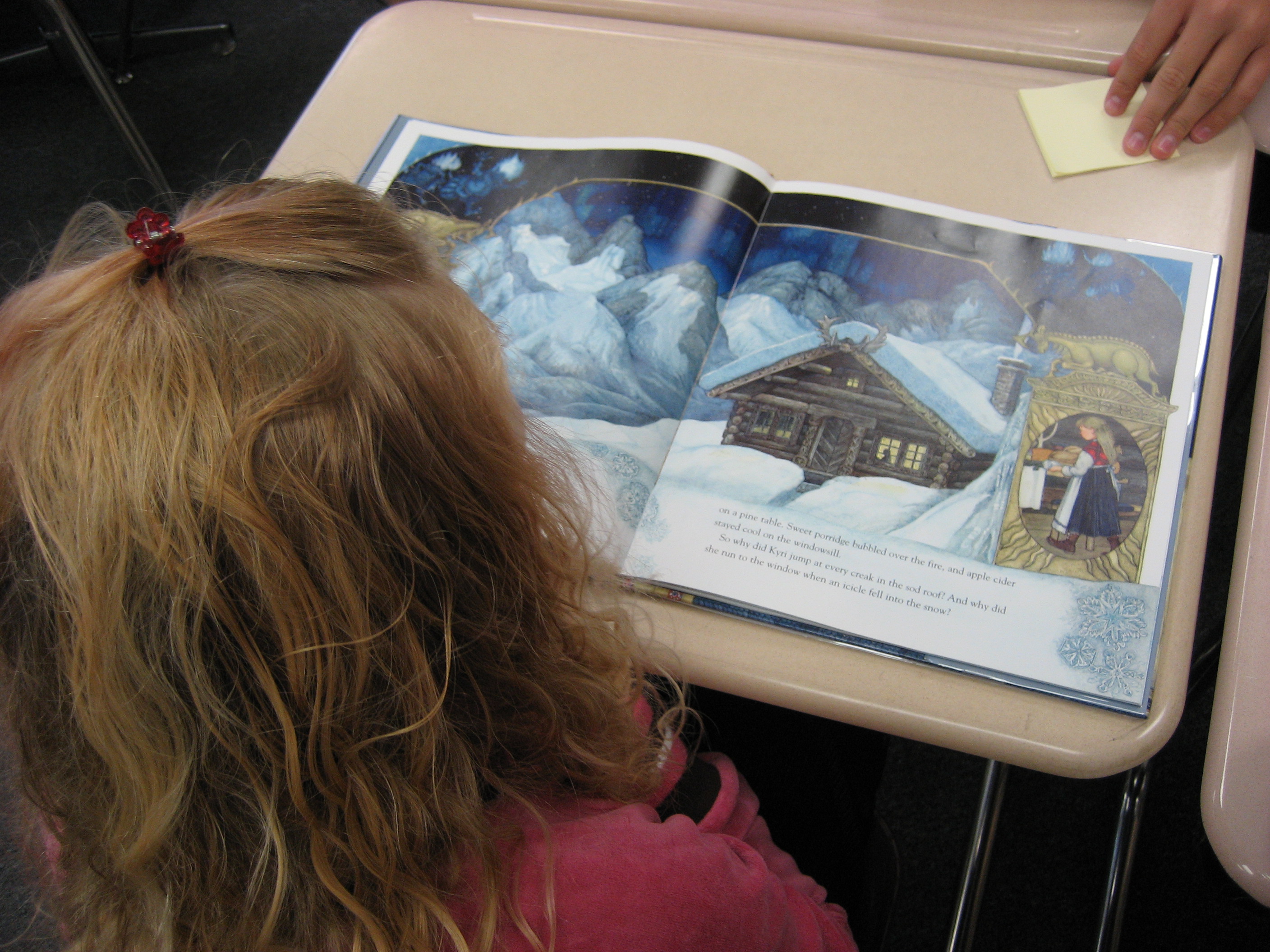
Here Lauren is making connections to nonfiction picture books.
Here is where students can post their making connections post it
notes.
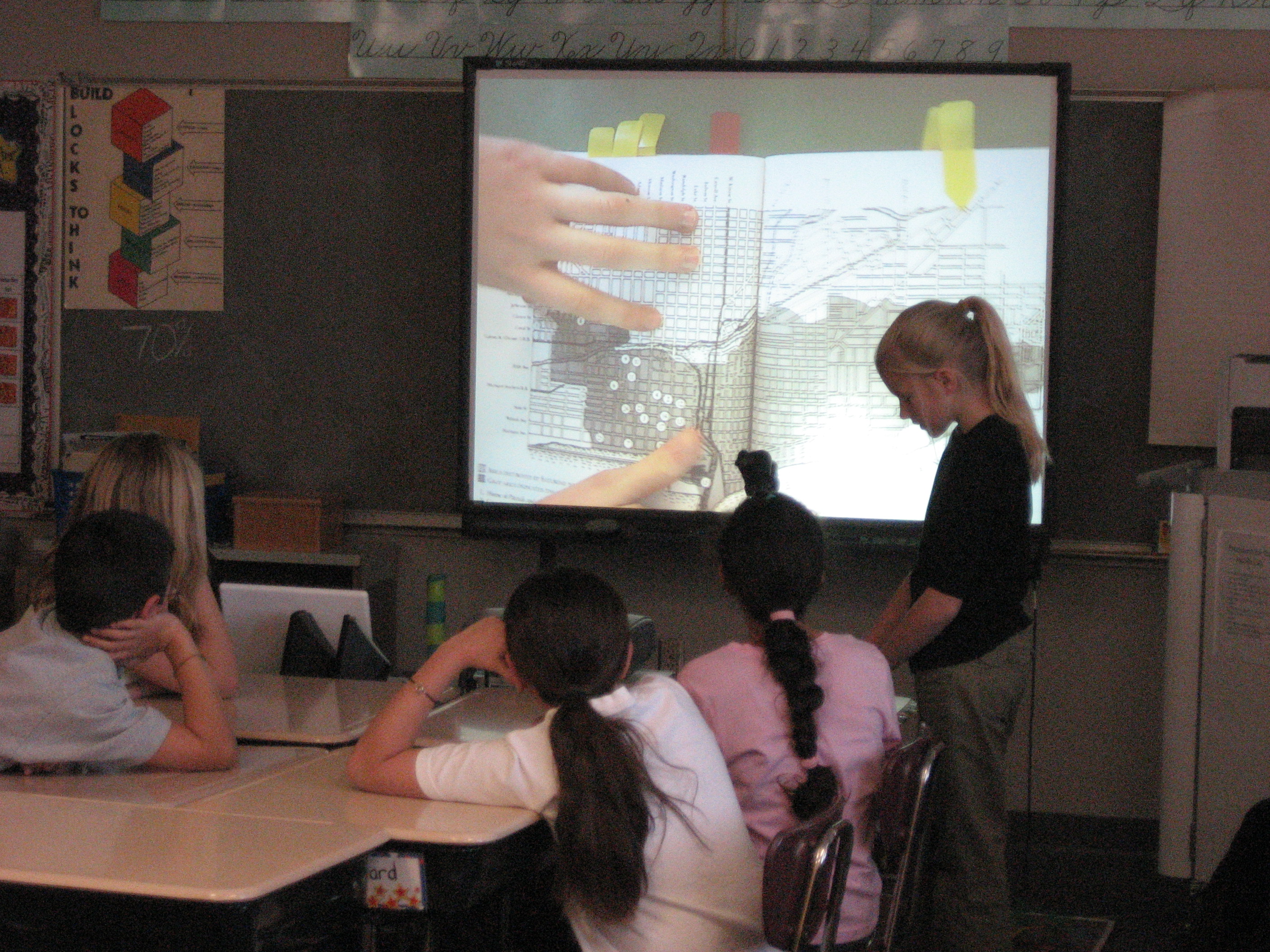
Here Laramy is utilizing the Aver (document camera) for her presentation.
.jpg)
Click to read Clara's nonfiction book about pigs!
.jpg)
Example of one of the student's highlighting and making notes on
the side.